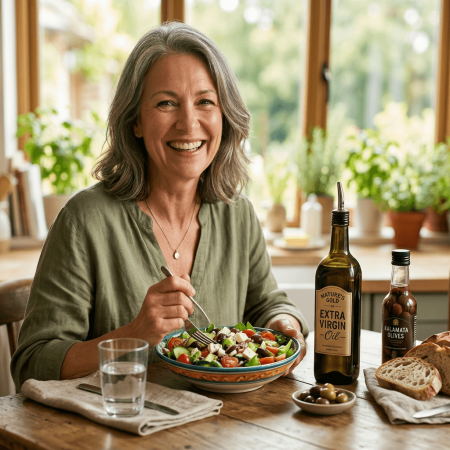
Olive oil has earned its reputation as one of the healthiest fats you can put on the table. For women, especially during menopause and the years leading up to it, it can be a genuinely useful ally: nourishing, satisfying, and surprisingly versatile. It is not a magic potion, but it does bring a lot of value in a very small pour.
One of the biggest advantages of olive oil is its heart-friendly fat profile. It is rich in monounsaturated fats, which are associated with better cardiovascular health when they replace highly processed fats. That matters because menopause often comes with changes in cholesterol, blood vessel function and overall metabolic health. In practical terms, olive oil can be one of those quiet little upgrades that supports your body without making life complicated.
Olive oil is also packed with bioactive compounds, especially in extra virgin olive oil. These include polyphenols, which have antioxidant and anti-inflammatory properties. That’s a big deal because chronic low-grade inflammation is linked to many modern health problems, from heart disease to joint discomfort. You do not need to think of olive oil as medicine, but you can think of it as food that works a little harder for you.
Another benefit is blood sugar support. When olive oil is used as part of balanced meals, it can help slow digestion and soften blood sugar spikes. That can be useful for women noticing more energy crashes or cravings, which are common during hormonal transition years. Pairing olive oil with vegetables, legumes, fish or whole grains, for example, is a smart, natural way to make meals more stable and satisfying.
It may also support brain health. Healthy fats are important for the nervous system, and olive oil has been associated in research with better cognitive aging patterns when included in a Mediterranean-style eating pattern. No, it will not turn your brain into a supercomputer, but it does fit nicely into a long-term strategy for keeping your mind sharp.
For digestion, olive oil can be helpful too. Many people find that it makes meals feel more nourishing and easier to enjoy, especially when it replaces heavier, ultra-processed fats. Used reasonably, it can also help food taste better, which matters more than people admit. If healthy eating feels like punishment, it usually will not last. Olive oil helps food feel like food.
There is also a very practical benefit: it makes healthy eating easier to sustain. A drizzle over roasted vegetables, a spoonful in soup or a simple dressing can transform a meal without requiring culinary heroics. That matters because the best nutrition strategy is the one you can repeat on a busy Tuesday when motivation is low and everyone is hungry.
A few simple ways to use olive oil well:
- Use extra virgin olive oil for salads, vegetables, dips and finishing dishes.
- Cook with moderate heat rather than using it for extremely high-temperature frying.
- Pair it with whole foods, not just as a topping for highly processed meals.
- Treat it as part of a broader healthy pattern, not an isolated “superfood.”
Of course, olive oil is still calorie-dense, so moderation matters. More is not automatically better. Think of it as a quality ingredient, not a free pass. A tablespoon or two can go a long way.
Conclusion
Olive oil is one of those rare foods that is both practical and evidence-friendly. It supports heart health, fits well into blood sugar-conscious eating, brings antioxidant compounds to the diet and makes healthy meals more enjoyable. For women who want to improve health in a natural, sustainable way, it is an excellent habit to keep.
References
- Cardiovascular health: S.S. Virani, A. Alonso, H.J. Aparicio, et al., Protective effects of oleic acid and polyphenols in extra virgin olive oil on cardiovascular diseases, 2024
- Inflammation and antioxidants: Mary M. Flynn, Audrey Tierney, Catherine Itsiopoulos, Is Extra Virgin Olive Oil the Critical Ingredient Driving the Health Benefits of a Mediterranean Diet? A Narrative Review, 2023
- Blood sugar and metabolic support: R.P. Mensink, Post-prandial effects of high-polyphenolic extra virgin olive oil on endothelial function in adults at risk for type 2 diabetes: A randomized controlled crossover trial, 2021
- Brain health and aging: Elisa Mazza, et al., Effect of the replacement of dietary vegetable oils with a low dose of extravirgin olive oil in the Mediterranean Diet on cognitive functions in the elderly, 2018