
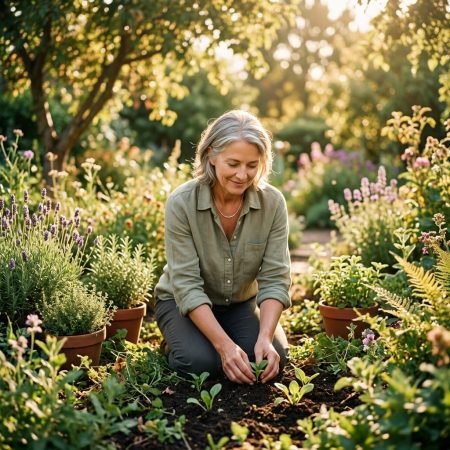
Let’s be honest — menopause can feel like your body decided to renovate the entire house while you’re still living in it. Hot flashes, mood swings, sleepless nights, and the sudden urge to Google “is this normal?” at 3 AM. But what if part of the relief you’re searching for isn’t in a pill bottle (though we love those too), but right outside your door?
Nature has a quietly remarkable way of softening the sharp edges of menopause. And no, you don’t need to move to a cabin in the woods or become a full-time forager. Let’s talk about practical, doable ways to bring more nature into your life — starting today.
Why Nature Contact Matters During Menopause
Research consistently shows that spending time in natural environments reduces cortisol levels, lowers blood pressure, and improves mood. For menopausal women, this matters enormously — your hormones are already throwing a party you didn’t RSVP to, so anything that calms the nervous system is gold.
Key benefits of nature contact during menopause:
- Reduced stress and anxiety — Time outdoors lowers cortisol, the stress hormone that tends to spike during hormonal transitions.
- Better sleep — Exposure to natural daylight helps regulate your circadian rhythm, which menopause loves to disrupt.
- Improved mood — Nature contact has been linked to reduced symptoms of depression and anxiety, both common during menopause.
- Gentle physical activity — Being outdoors naturally encourages movement, which supports bone health, cardiovascular health, and weight management.
- Cooler body temperature — Shaded, green spaces can be literally cooler, offering a natural respite from hot flashes.
Gardening: Your New Menopause Ally
Here’s the thing about gardening: it’s sneaky. You think you’re just planting tomatoes, but suddenly you’ve spent an hour squatting, stretching, breathing fresh air, and feeling the soil between your fingers — and your nervous system has completely recalibrated.
Why gardening is particularly powerful for menopausal women:
- Grounding and mindfulness — The repetitive, tactile nature of gardening (sowing, weeding, pruning) creates a meditative state that calms racing thoughts.
- Vitamin D exposure — Sensible sun time while gardening boosts vitamin D, which is crucial for calcium absorption and bone health — a top concern after menopause.
- Light exercise — Digging, raking, and carrying pots provide resistance training that supports muscle mass and bone density without the intimidation of a gym.
- Sense of control — During a phase of life where your body feels unpredictable, growing something with your own hands is deeply empowering.
- Soil microbiome contact — Emerging research suggests that contact with soil microbes (like Mycobacterium vaccae) may boost serotonin levels and improve mood. Yes, dirt can literally make you happier.
Getting started doesn’t require a farm:
- Container gardening on a balcony or windowsill — herbs like basil, rosemary, and lavender are easy and fragrant.
- Raised beds if you have a yard but want to spare your back (because menopause joints are not to be trifled with).
- Community gardens — no space at home? Many cities offer plots where you can grow your own and meet other green-thumbed humans.
- Indoor plants — even tending houseplants has been shown to reduce stress and improve indoor air quality.
Forest Bathing: The Art of Just Being Outside
Shinrin-yoku, or forest bathing, is a Japanese practice that involves immersing yourself in a forest atmosphere — not hiking, not exercising, just being present among trees. Studies have shown it reduces stress hormones, lowers heart rate, and boosts immune function.
How to try it:
- Find a nearby park, trail, or wooded area — it doesn’t need to be a sprawling forest.
- Leave your phone in your pocket (gasp).
- Walk slowly. Notice the light through the leaves, the sound of wind, the smell of earth.
- Aim for 20–30 minutes, 2–3 times per week.
For menopausal women, the combination of gentle movement, fresh air, and sensory grounding makes forest bathing a beautifully low-effort, high-impact practice.
Daily Nature Contact: Small Habits, Big Returns
Not every day allows for a garden session or a forest walk. But nature contact can be woven into daily life in surprisingly simple ways:
- Morning sunlight — Step outside for 5–10 minutes within an hour of waking. This helps regulate melatonin production, supporting better sleep at night.
- Eat lunch outside — Even a bench in a small park counts. Combine fresh air with a break from screens.
- Walk barefoot on grass — Known as “earthing” or “grounding,” this practice (while still being studied) may help reduce inflammation and improve sleep.
- Birdwatching — It sounds niche, but focusing on identifying birds trains your attention outward, away from internal discomfort, and keeps you outdoors longer.
- Open windows — Letting fresh air circulate in your home connects you to outdoor rhythms even when you’re inside.
Supporting Your Body Naturally While You Reconnect
Nature contact is one of the most powerful, free tools available — but it works best as part of a broader natural wellness strategy. Pairing outdoor time with targeted nutritional support can help your body navigate hormonal shifts with more ease.
Certain supplements are especially valuable during menopause: phytoestrogens (like black cohosh and red clover) to ease hot flashes, magnesium for sleep and muscle tension, and omega-3 fatty acids for mood and joint health.
Final Thoughts
Menopause is a profound transition — not an ending, but a recalibration. And while you can’t control every wave of change your body sends your way, you can control how much nature you let in.
Whether it’s growing herbs on a windowsill, walking slowly through a park, or simply standing in the morning sun with a cup of tea — every moment of nature contact is a small act of self-care that your body recognizes and rewards.
You’re not just surviving this phase. With the right tools, the right environment, and a little dirt under your nails, you’re growing through it.
References
1. Nature contact and stress reduction: Nature and mental health: An ecosystem service perspective, Bratman G.N. et al., 2019
2. Forest bathing and physiological benefits: The effects of forest bathing on physiological and psychological health, Li Q., 2010
3. Soil microbes and mood: Identification of an immune-responsive messenger in the brain, Lowry C.A. et al., 2007
4. Gardening and well-being: Gardening is beneficial for health: A meta-analysis, Soga M. et al., 2017
5. Morning light and circadian rhythm: The role of environmental light in sleep and circadian rhythm disorders, Cho Y. et al., 2018