
1. Nutrition & Food: Your Complete Guide to Eating Well Through Menopause
Let’s be honest: for most of our lives, we’ve been taught to look at food through a very narrow lens—usually one involving a bathroom scale and a sense of restriction. But as we enter the transition of menopause, the conversation has to shift. Food is no longer just about fitting into those jeans from three summers ago; it is quite literally information. Every bite you take is a set of instructions delivered to your cells, telling your body how to manage inflammation, how to stabilize your mood, and how to navigate the shifting tides of your hormones.
During menopause, that information matters more than ever. Your body is going through a massive internal renovation, and you wouldn’t try to rebuild a house using flimsy materials, right? When estrogen begins its slow retreat, our bodies become more sensitive to everything—from the spike of a sugary snack to the jittery aftermath of a third cup of coffee. It can feel like your body has suddenly changed the rules of the game without giving you the new handbook. If you’re feeling a bit lost, you might want to start with our complete guide to natural menopause to see the bigger picture of this journey.
This guide is here to provide that handbook. We aren’t talking about “dieting” in the way the 90s taught us. We are talking about nourishment. We’re talking about choosing the allies that will help you sleep through the night, keep your brain sharp, and protect your bones for the decades of adventures still to come. Think of this page as your central hub—the place where all the nutritional pieces of the menopause puzzle finally click into place.
You aren’t broken, and you certainly don’t need to survive on steamed broccoli and sadness. You just need a new strategy. By understanding how specific nutrients, inflammatory triggers, and gut health interact with your changing hormones, you can move from just “getting through it” to actually thriving in this new chapter. Let’s dive into the foundation of your menopausal kitchen.
1.1 The Foundation — Essential Nutrients
As estrogen levels decline, our nutritional “margin for error” gets a little slimmer. Estrogen wasn’t just about reproduction; it was a multi-tasking powerhouse that helped us absorb calcium, manage cholesterol, and keep our skin elastic. Without its constant presence, we have to be more intentional about the building blocks we provide our bodies. These aren’t just optional extras or “nice-to-haves”—they are the essential components required to keep the machinery running smoothly.
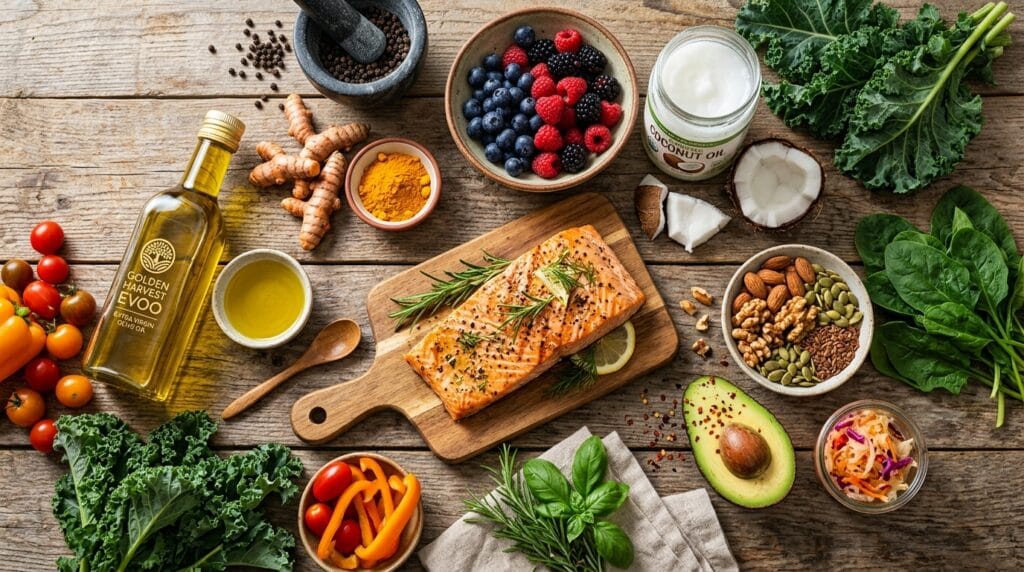
Focusing on essential nutrients for menopausal health means prioritizing things like Magnesium for sleep and anxiety, Vitamin D and Calcium for bone integrity, and Omega-3 fatty acids to keep the brain fog at bay. We also need to talk about fiber—not the most glamorous topic, perhaps, but absolutely vital for escorting used-up hormones out of the body and keeping our blood sugar stable. When we provide these nutrients through whole foods, we give our bodies the resilience they need to handle the hormonal fluctuations of perimenopause and beyond.
Think of these nutrients as your internal support crew. While you might have been able to skip a few meals or live on toast in your twenties, your menopausal body is asking for more. It wants the deep greens, the colorful berries, and the high-quality proteins. By shifting your focus toward nutrient density, you’re not just preventing deficiencies; you’re actively signaling to your nervous system that it is safe, supported, and well-fed.
1.2 The Usual Suspects — Foods That Work Against You
While we love to focus on what to add, we also have to be honest about the “usual suspects” that tend to make menopause symptoms worse. These aren’t “bad” foods in a moral sense, but they are often the hidden culprits behind that 3:00 AM wake-up call or the sudden hot flash in the middle of a board meeting. Understanding how these substances interact with your changing chemistry is the first step toward taking back control.
Caffeine
We know, we know. Suggesting a reduction in coffee during a time when you’re likely exhausted feels like a personal attack. However, caffeine and menopause have a complicated relationship that we can’t ignore. Caffeine is a stimulant that triggers the release of cortisol—the stress hormone. Since menopause is already a time of heightened cortisol sensitivity, that morning latte can sometimes send your system into a “fight or flight” response that lasts all day.
For many women, caffeine is a direct trigger for vasomotor symptoms (the fancy term for hot flashes and night sweats). It can also interfere with the deep, restorative sleep you desperately need to manage mood swings. The goal isn’t necessarily total abstinence, but rather awareness. Knowing your threshold—perhaps it’s one cup before 10:00 AM—can make the difference between a productive afternoon and a jittery, sweat-soaked one. It’s about finding the balance where you enjoy your ritual without paying for it at midnight.
Sugar
Sugar is perhaps the most deceptive of the suspects. It offers a quick hit of energy when we’re flagging, but the subsequent crash is brutal. Beyond the energy roller coaster, sugar’s effect on menopause goes far beyond empty calories. High sugar intake drives systemic inflammation, which can exacerbate joint pain and “meno-rage.” It also feeds the stress-cortisol cycle, making it much harder for your body to burn fat, particularly around the midsection.
There is also the issue of glycation—a process where sugar molecules attach to proteins in our skin, accelerating the aging process and loss of elasticity. To manage this, we don’t have to give up sweetness entirely. The trick is to “buffer” your sweets. If you’re going to have something sugary, pair it with healthy fats or protein to slow down the glucose spike. Embrace nature’s candy (berries are a menopausal superfood!) and use spices like cinnamon to help stabilize your blood sugar naturally. Small shifts in how you consume sugar can lead to massive improvements in your daily energy levels.
Gluten
You might have noticed that foods you used to digest just fine are suddenly making you feel bloated or sluggish. This isn’t in your head. The gluten-menopause connection is emerging in research as a significant factor for many women. As estrogen—which is naturally anti-inflammatory—drops, our bodies become less tolerant of inflammatory triggers. For some, gluten can drive low-grade inflammation that manifests as brain fog, skin rashes, or digestive distress.
There is also a documented link between gluten sensitivity and thyroid health, as well as bone density. If you’re struggling with stubborn symptoms that won’t budge, a 3-4 week elimination trial can be incredibly revealing. You might find that removing gluten helps clear the “fog” and reduces the puffiness that often accompanies this stage of life. It’s not about following a trend; it’s about listening to whether this specific protein is currently serving your body or stressing it out.
1.3 Your Dietary Allies — Foods That Help
Now for the good news: there are powerful allies waiting in your pantry. These aren’t just “healthy” foods; they are functional tools that can help dampen inflammation, protect your heart, and keep your hormones in a state of relative peace. When we focus on these allies, we move away from the “don’t eat this” mindset and into a space of proactive healing.
Olive Oil
If there is one thing you should consider adding to almost every meal, it’s high-quality extra virgin olive oil. We view olive oil as a menopause ally because it is packed with polyphenols—compounds that act like a fire extinguisher for internal inflammation. As our natural cardiovascular protection (estrogen) wanes, the monounsaturated fats in olive oil step in to support heart health and maintain healthy cholesterol levels.
Beyond the heart, olive oil is essential for nutrient absorption. Many of the vitamins we need most during menopause—like A, D, E, and K—are fat-soluble, meaning your body can’t actually use them without a healthy fat present. Drizzling olive oil over your veggies isn’t just about flavor; it’s about making sure your body actually gets the “essential nutrients” you’re working so hard to eat. It’s a cornerstone of the Mediterranean diet, which remains the gold standard for healthy aging.
Anti-Inflammatory Foods
Inflammation is the “silent” driver behind so many of the symptoms we associate with menopause. From the “frozen shoulder” and achy knees to the mood swings and skin changes, much of it comes down to an overactive inflammatory response. This is why anti-inflammatory foods for menopause are your best defense. Nearly 60% of post-menopausal women report symptoms that are directly linked to chronic, low-grade inflammation.
Your anti-inflammatory toolkit should include vibrant spices like turmeric (always paired with black pepper to unlock its power) and ginger, as well as fatty fish like salmon or sardines for their high Omega-3 content. Leafy greens and deep-colored berries provide the antioxidants needed to protect your cells from oxidative stress. By filling your plate with these “coolants,” you can significantly reduce the severity of your symptoms and feel more like yourself again.
1.4 The Gut Connection — Fermented Foods
We can’t talk about nutrition without talking about the gut. You may have heard of the microbiome, but have you heard of the “estrobolome”? This is a specific collection of bacteria in your gut responsible for metabolizing and recycling estrogen. When your ovaries begin to wind down their production, your gut health becomes the primary player in how much estrogen is actually available to your body. If your gut is out of balance, your hormones will be too.
This is where fermented foods for menopause come in. Foods like sauerkraut, kimchi, and kefir are like a probiotic “reboot” for your system. Since about 90% of your serotonin (the “feel-good” neurotransmitter) is produced in your gut, keeping your microbiome happy is one of the most effective ways to manage menopausal anxiety and depression. Whether it’s a spoonful of kraut with dinner or a glass of kombucha in the afternoon, these “living” foods are essential for hormonal harmony.
1.5 Putting It All Together
So, how do we make this practical? It’s easy to feel overwhelmed by the lists of what to eat and what to avoid. The key is to remember that food is the foundation. You can take all the vitamins in the world, but if your diet is driving inflammation and crashing your blood sugar, those supplements will be fighting an uphill battle. When you get the food right, everything else—from your sleep hygiene to your exercise routine—starts to work more effectively.
As you refine your diet, targeted supplementation becomes valuable to fill in the gaps that food alone might not cover. But always start with the plate. Focus on crowding out the “suspects” by adding in more “allies.” Start small: maybe this week you focus on adding one fermented food a day, or you swap your afternoon soda for a sparkling water with a splash of fruit juice. These small, consistent choices compound over time into a lifestyle that supports your body rather than stressing it.
1.6 This Guide Is Growing With You
Menopause is not a destination; it’s a transition, and your nutritional needs will continue to evolve as you move through it. This guide is a living resource, and we will continue to update it with the latest science and practical tips to help you navigate this journey. If you’re feeling unsure of where to start, we highly recommend beginning with our deep dive into essential nutrients—it’s the best way to ensure your “renovation” has the right materials.
Remember: you are not broken. You are going through a natural, powerful transformation that deserves respect, patience, and the best information available. You deserve to feel good in your skin, and the food you choose is one of the most powerful tools you have to make that happen. We’re in this with you.
Latest Posts
Gluten & Menopause: The Hidden Connection Every Woman Should Know
Let’s be honest — menopause already feels like enough of...
Read More

The Benefits of Olive Oil: A Gentle, Science-Backed Ally for Menopause
Menopause has a way of reminding women that the body...
Read More
Sugar: How this can be a threat in multiple ways
Welcome, lovely ladies, to the club where our internal thermostats...
Read More
Bubbles, Bacteria and Balance: Why Your Menopausal Body Needs Fermented Foods
Let’s be honest: “Bacteria” is usually a word we associate...
Read More