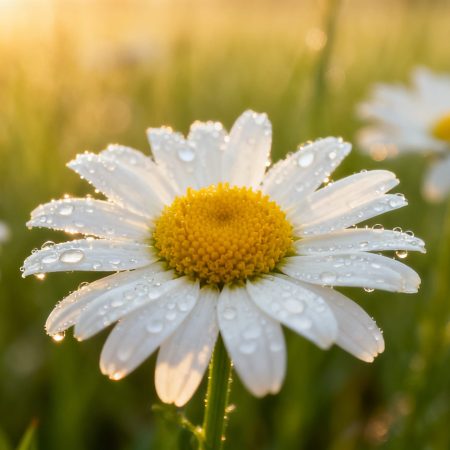
Let’s be honest for a second. Somewhere between the third hot flash of the morning and forgetting why you walked into the kitchen, you’ve probably fantasized about moving to a silent cave in the Himalayas.
Menopause has a funny way of making us feel like our internal wiring is being handled by a chaotic electrician. But before you book that one-way ticket to the mountains, let me introduce you to an old friend who’s been waiting patiently in your pantry: Chamomile.
It’s not just that tea your grandma drank. It’s a powerhouse of calm in a world that feels increasingly loud. Let’s dive into how this dainty little flower can help you reclaim your cool (literally and figuratively).
More Than Just “Polite Water”
We tend to think of chamomile tea as “polite water”—something mild you drink when you have a sniffle. But scientifically? It’s a heavyweight champion.
The magic ingredient here is a flavonoid called apigenin. Without getting too boggy in the biochemistry, apigenin binds to the same receptors in your brain as Valium (benzodiazepines), but without the grogginess or the prescription pad. It is nature’s way of saying, “Shhh, it’s okay.”
The Sleep Savior
If menopause has turned your sleep schedule into a cruel joke (tired at 8 PM, wide awake at 3 AM contemplating the universe), chamomile is your new best friend.
It’s not a knockout drug; it’s a gentle sedative. Drinking a strong cup regarding 45 minutes before bed helps lower your core body temperature and signals your nervous system to switch from “Fight or Flight” to “Rest and Digest.”
Professional Tip: Don’t just dip the tea bag for 30 seconds. Cover your mug (to keep the essential oils from evaporating) and let it steep for a solid 10 minutes. We want medicinal strength, not vaguely floral water.
Taming the Tummy
Estrogen plays a role in digestion, so when levels drop, things can get… bloated. Uncomfortable. Grumpy.
Chamomile is classified as a “carminative” herb, which is a fancy way of saying it breaks up gas and relaxes the smooth muscles of the digestive tract. It stops the spasms that cause cramping. If your stomach feels like an inflated balloon after lunch, a cup of chamomile is cleaner and often faster than the pink stuff in the medicine cabinet.
The Skin Soother
Let’s talk about the mirror. Menopausal skin can be dry, red, or suddenly prone to breakouts like we’re teenagers again (cruel, right?).
Chamomile is famously anti-inflammatory. You don’t just have to drink it.
- The Compress: Brew a strong batch, let it cool in the fridge, soak a washcloth, and apply it to your face. It reduces redness and puffiness.
- The Bath: Buy dried chamomile flowers (or chamomile essential oil) and put them in your bath. It soothes dry, itchy skin that often comes with hormonal shifts.
Beyond the Tea Bag: Other Forms
If you aren’t a tea drinker (or you’re trying to limit liquids before bed so you don’t have to pee three times a night), you have options:
- Essential Oil: Roman Chamomile essential oil is potent. Dilute a few drops in a carrier oil (like jojoba or almond) and massage it into your feet or solar plexus before bed. It smells like apples and sunshine.
- Capsules/Extracts: If you need a standardized dose for anxiety, supplements exist. They pack a higher punch of apigenin than tea.
- Topical Creams: Look for creams with Matricaria recutita (German chamomile) listed high on the ingredient list for eczema or skin irritation.
A Gentle Warning
While chamomile is safe for most, it is part of the ragweed family. If you sneeze your head off around ragweed, chrysanthemums, or marigolds, approach chamomile with caution. Start small to make sure you aren’t allergic.
The Bottom Line
You don’t need to overhaul your entire life to find a moment of peace. Sometimes, maximize health starts with boiling water, inhaling the steam, and taking ten minutes to just be.
So, pour a mug, put your feet up, and let the flower do the heavy lifting. You’ve earned it.
References
- Anxiety & Mood: Mao JJ, et al., “Long-term chamomile (Matricaria chamomilla L.) treatment for generalized anxiety disorder: A randomized clinical trial”, 2016.
- Metabolic Health: Rafraf M, et al., “The effect of chamomile tea on glycemic control and lipid profile in type 2 diabetic patients”, 2015.
- General Benefits & Inflammation: Srivastava JK, et al., “Chamomile: A herbal medicine of the past with bright future”, 2010.